Protect existing investments
By retaining systems and infrastructure that continue to provide operational value.
Modern mission-critical environments depend on multiple technologies, systems, networks, platforms, and applications working together reliably and securely.
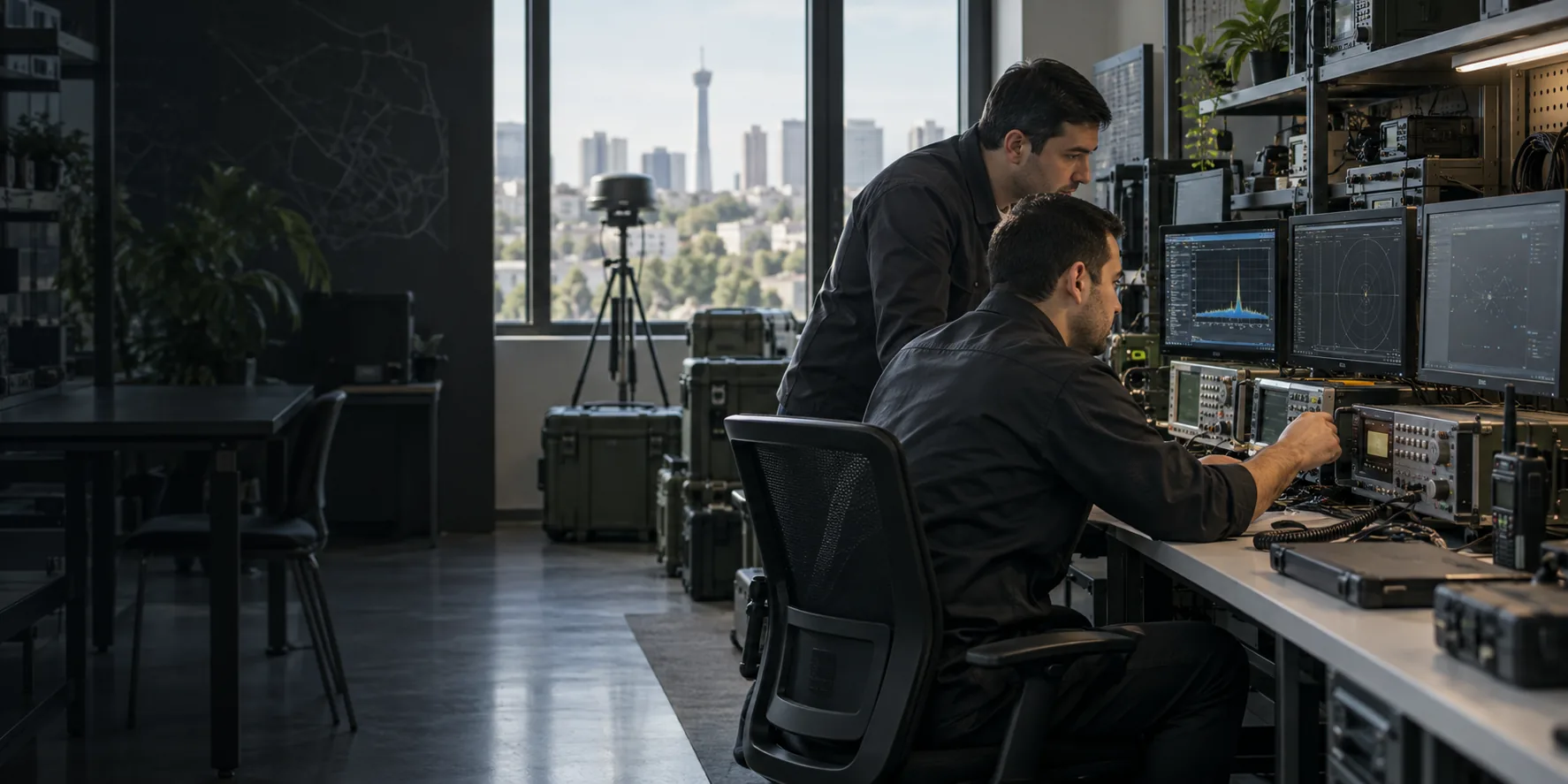
Systems integration is at the core of what S3 does.
We work with our customers and technology partners to bring individual technologies together into complete solutions designed around operational requirements, existing capabilities, infrastructure, and future development needs.
Our role goes beyond supplying individual products. We help determine how technologies should connect, exchange information, and operate together as part of a wider operational environment.
The objective is to transform individual technologies into integrated, sustainable operational capabilities.
Organizations often already have significant investments in communications systems, networks, applications, platforms, infrastructure, and — equally importantly — personnel trained to operate and support them.
Modernization does not necessarily mean replacing everything.
Where technically feasible and operationally appropriate, S3 works to integrate new technologies and capabilities with the customer's existing systems, networks, platforms, and infrastructure.
Our approach is designed to preserve valuable existing capabilities while progressively introducing technologies that can improve performance, interoperability, security, situational awareness, and operational effectiveness.
This approach can help customers:
By retaining systems and infrastructure that continue to provide operational value.
Rather than requiring complete technology replacement at once.
Between new and existing systems.
Of operational equipment and infrastructure.
By allowing technology, processes, and personnel to evolve together.
Through architectures designed to accommodate further development.
Modernization is also about people. Existing knowledge, experience, procedures, and trained personnel are valuable organizational assets.
For this reason, S3 combines systems integration with training, knowledge transfer, and lifecycle support, helping customers introduce new capabilities while building on the expertise they already have.
Preserving what works. Integrating what is new. Building for what comes next.
Successful integration begins with understanding the operational requirement — not with selecting a product.
Before proposing a solution, S3 works to understand the customer's objectives, existing capabilities, technical environment, operational constraints, interoperability requirements, and future development plans.
This allows us to answer three fundamental questions:
What capability is required?
What existing capabilities should be retained?
How should new and existing technologies work together?
Only then can the appropriate technologies and integration approach be defined.
This requirements-driven approach helps ensure that technology is selected to support an operational objective rather than requiring the customer to adapt its requirements to a particular product.
Depending on the project, S3 can integrate technologies across multiple capability areas, including:
These technologies may come from different sources and serve different functions, but their operational value increases when they can securely exchange information and operate as part of a coordinated environment.
Connecting People, Systems, and Information
Interoperability is a fundamental consideration in modern operational environments.
Communications systems must connect users. Networks must transport information. C2 applications must provide relevant information to decision-makers. Command posts must communicate with deployed personnel and platforms. Sensors and other information sources must make useful information available to authorized users.
S3 considers these relationships from the beginning of the solution design process.
Depending on customer requirements, integration may include:
Connecting users, radio networks, communication systems, and operational locations.
Establishing secure data connectivity between systems, platforms, command posts, and applications.
Connecting command-and-control applications with tactical communications, networks, and relevant information sources.
Integrating communications, networking, C2, and other technologies with mobile, fixed, or deployable platforms.
Supporting controlled information exchange between compatible operational systems.
Bringing together communications, IT, networking, power, workstations, servers, displays, and other supporting technologies within command-post or deployable environments.
The objective is not connectivity for its own sake, but the reliable delivery of the right information to the right users and systems when it is needed.
We begin by working with the customer to understand operational objectives, existing capabilities, constraints, technical dependencies, and expected outcomes.
Where existing systems are involved, we assess the relevant technical environment, including infrastructure, interfaces, networks, applications, and interoperability requirements.
Working with our technology partners, S3 develops a solution architecture defining the technologies required and how individual components should interact.
The design considers security, interoperability, reliability, scalability, maintainability, and future development.
Selected technologies are configured and brought together according to the agreed solution architecture.
Integration may involve communications systems, networks, applications, platforms, servers, command-post infrastructure, and existing customer systems.
Integration must work in practice.
The solution is tested to verify functionality, connectivity, information exchange, and interoperability against the defined requirements.
Where appropriate, representative operational scenarios can be used to validate that the integrated solution performs as intended.
Following successful integration and testing, S3 supports deployment, configuration, commissioning, and introduction of the solution into the customer's operational environment.
Operators, administrators, technical personnel, maintenance specialists, and customer instructors can be trained according to their responsibilities.
Training helps customer personnel understand both the individual technologies and how they operate together as an integrated system.
Integration does not end with commissioning.
S3 can continue supporting the solution through technical assistance, troubleshooting, configuration support, knowledge sharing, training, and Field Service Representative services.
Understand → Assess → Design → Integrate → Test → Deploy → Train → Support
Complex systems integration requires close cooperation between the customer, systems integrator, and technology manufacturers.
S3 serves as a local integration and coordination point, connecting customer requirements with the technologies and specialist expertise available through our international partners.
This approach enables direct cooperation between customer specialists, S3 engineers and representatives, and technology manufacturers when deeper technical expertise is required.
It also allows S3 to remain close to the customer during implementation and operation while providing access to international technical resources.
The result is a combination of global technology and expertise with local integration and support.
Operational requirements change. Technologies evolve. New capabilities become available.
For this reason, systems integration should consider not only today's requirement but also what may be needed tomorrow.
Where possible, S3 promotes architectures that allow customers to introduce additional radios, applications, networks, platforms, sensors, and other technologies progressively rather than repeatedly rebuilding the entire environment.
This supports a transition from individual technology projects toward a connected, interoperable, and sustainable technology ecosystem.
Technology integration and human capability must develop together.
Even the most advanced integrated system cannot deliver its full value if personnel do not understand how to operate, administer, maintain, and support it.
Training and knowledge transfer are therefore an integral part of the S3 integration approach.
Depending on customer requirements, S3 provides training for:
Our objective is to develop customer personnel who understand their systems and can perform appropriate operational and technical tasks independently, while retaining access to S3 and manufacturer expertise when higher-level support is required.
Our involvement does not have to end when a system becomes operational.
S3 can provide continued technical and operational support for the solutions we deliver, including Field Service Representative (FSR) support, troubleshooting, configuration assistance, knowledge sharing, additional training, and coordination with technology manufacturers.
This lifecycle approach helps customers maintain the effectiveness of their systems while continuously developing local technical expertise.
S3 brings together technology, integration, people, and support.
From understanding the initial requirement to integrating new capabilities with existing systems, training customer personnel, and supporting deployed solutions, we provide a coordinated approach throughout the solution lifecycle.
Our objective is not simply to introduce new technology.
It is to help customers modernize in a practical and sustainable way — preserving what works, integrating what is new, and building for what comes next.
From Technology to Operational Capability